Plain Language for Knowledge Management: From Clear Documentation to Operational Intelligence
Clear Communication Can Formalize Operational Intelligence—Especially in Today’s Distributed Teams
“The path forward requires acknowledging a hard truth: you cannot manage what you do not understand, and you cannot understand what you have not bothered to document and internalize in knowledge management systems.”
Plain language is often described as communications refinement: shorter sentences, simpler words, fewer acronyms. That framing undersells its strategic value. When applied to process documentation, plain language functions as knowledge infrastructure—a way to surface, formalize, and transfer operational intelligence that would otherwise remain implicit, obscured, fragmented, or lost.
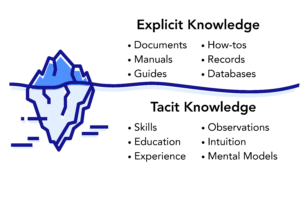
This is particularly true in offshore and distributed operations, where undocumented assumptions and “tribal knowledge”—unwritten know-how—quietly become sources of risk and inefficiency.
The Real Problem: Unclear Knowledge, Not Just Unclear Writing
Most organizations treat process documentation as a compliance artifact—something produced to satisfy ISO requirements or formulaic auditing steps. As a result, procedures often under-describe what to do and evade explaining why, when, or how decisions are actually made.
In offshore and distributed contexts, this gap is amplified. Onshore and in person teams rely on context built through proximity, informal conversations, and shared history. Offshore and remote teams inherit the tasks, but not the tacit knowledge and hallway troubleshooting that makes those tasks successful. The result is predictable:
- Repeated clarification requests across time zones
- Over-reliance on senior staff to interpret intent
- Inconsistent outcomes masked as “execution issues”
- Slow onboarding and fragile continuity when people leave
These are not communication failures. They are failures of knowledge capture.
Plain Language as a Tool for Making the Implicit Visible
Applied rigorously, plain language forces an organization to articulate what it actually knows—not what it assumes people will infer. The act of writing clearly exposes gaps between documented processes and lived reality.
Specifically, plain language accelerates procedural knowledge formalization by requiring teams to:
- Break work into discrete, observable steps
- Identify decision points, conditions, and exceptions
- Make assumptions explicit rather than implied
- Distinguish between rules, guidance, and judgment calls
- Use consistent structures and terminology across procedures
In other words, plain language reverse-engineers expertise. It extracts what experienced staff “just know” and makes it transferable.
A quick story: The Secretary Who Took the System With Her
A common knowledge-management anecdote tells of an office where a long-serving secretary maintained a flawless filing system. Documents were always easy to get—until she left. Overnight, retrieval became nearly impossible. The files were still there, but the holder of the logic behind them was not.
This story endures because it captures a universal organizational risk: processes can appear stable while being fundamentally non-transferable. When expertise remains implicit, the system walks out the door with the expert.
Plain language addresses this failure mode by forcing organizations to make their reasoning explicit—so processes remain usable even when people move on.
Operational Benefits for Teams
For all teams, and especially for distributed teams, clear, plain-language process documentation delivers concrete operational advantages:
- Reduced dependency on synchronous communication. Teams can execute independently without waiting for clarification calls or Slack threads.
- Faster, more reliable onboarding. New hires learn the process as it actually works, not as it is informally explained.
- Clearer accountability. Documentation defines what “done” means, reducing ambiguity and rework.
- Continuous improvement from the front line. When processes are intelligible, teams can identify inefficiencies themselves rather than simply executing flawed workflows.
The shift is subtle but significant: hollow, modular, and virtual organizations can rebuild the link to core processes.
Where the RAISE™ Framework Becomes Operational
This is where a structured framework such as RAISE™ moves plain language beyond generic training and into operational design:
- Relevance
Does the process capture what people actually need to know to do the work, or just
That the organization thinks should be documented? - Access
Can someone in Manila or Bangalore execute the process without relying on informal escalation to a head office? - Intelligibility
Are decision points defined clearly enough that two people would reach the same conclusion? - Suitability
Does the documentation reflect how the work truly flows for users, rather than how it was imagined during design? - Efficacy
Can the organization measure whether clearer processes reduced errors, questions, or rework?
Using plain language within this framework turns documentation into a testable operational asset rather than static text.
Complaints and Feedback as Diagnostic Signals
One underused input into this work is complaint and feedback language. Complaints are rarely just emotional reactions; they often point directly to where documented processes diverge from reality. When people say, “This step doesn’t make sense,” or “We always have to ask for clarification,” they are identifying knowledge gaps.
Analyzed systematically, this type of language becomes a diagnostic tool for process improvement—highlighting where assumptions are unstated, decision logic is missing, or responsibilities are unclear.
A Different Kind of Deliverable
Positioned as a bridge towards procedural knowledge, the outcome of plain language work is not simply “clearer documents,” but deliverables that leverage clarity towards a stronger culture:
- Decision maps showing where expertise is actually applied
- Knowledge-gap analyses that identify undocumented assumptions
- Standardized procedures that function across geographies and experience levels
- Measurable reductions in clarification requests, escalations, and rework
This reframes plain language as organizational infrastructure—a way to preserve institutional knowledge, enable scale, and reduce operational risk.
From Communication Polish to Operational Intelligence
When plain language is treated as a strategic capability, it becomes a lever for knowledge management, helping organizations capture what they know, make it usable across boundaries, and ensure that expertise does not remain locked in individual heads or local contexts.
In distributed operations, that shift is not optional. It is foundational.