Plain Language Guide, Style Guide, or Both?
Where Does Plain Language End and Editorial Style Begin? And Why Your Organization Needs Two Separate Guides
A recent fabulous Plain Canada Clair webinar about style guides sparked conversation about the confusion many organizations face:
How much should a plain language guide cover, and when should editorial guidance take over?
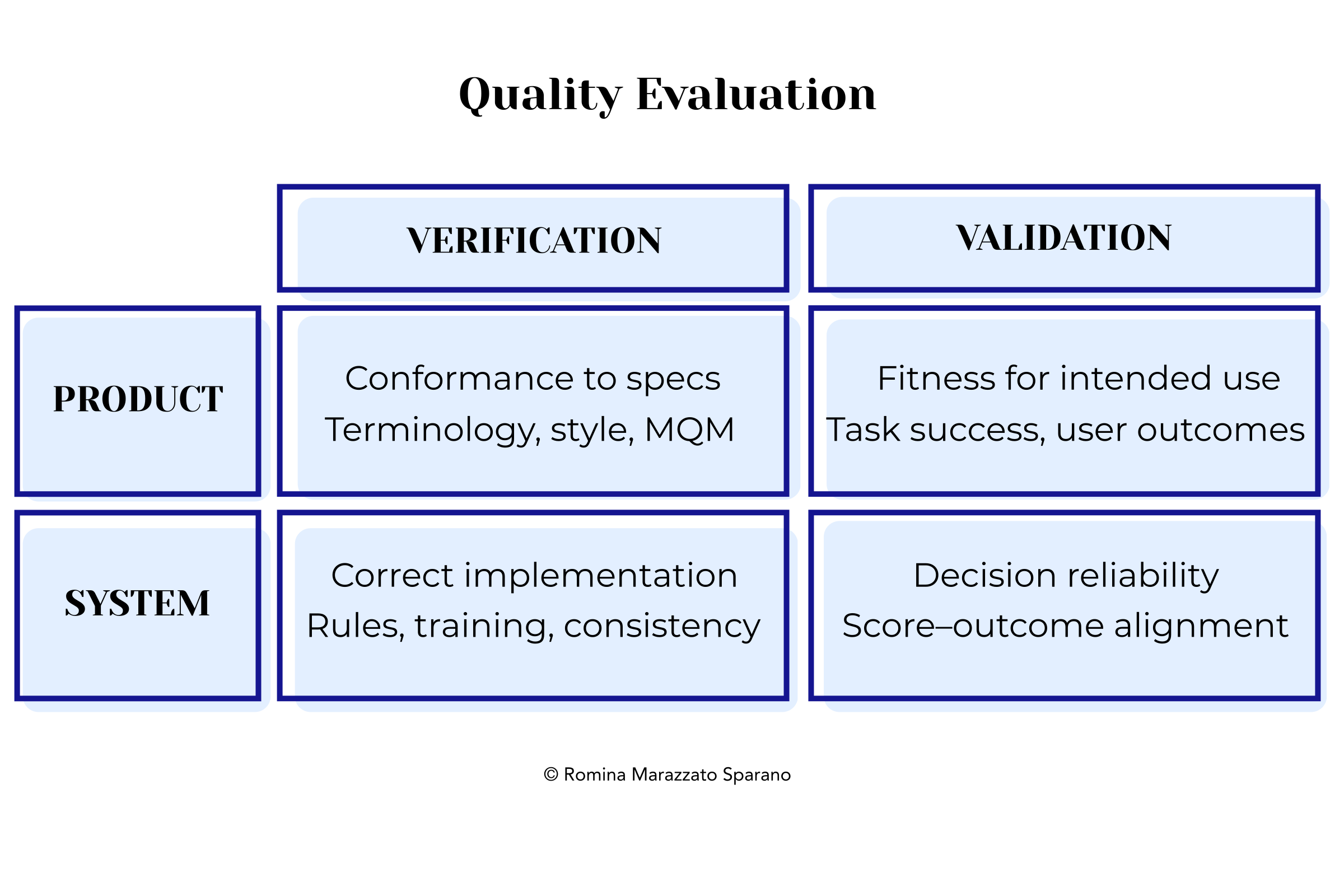
The short answer is that a plain language guide should help people make writing understandable, while a style guide should help people make writing consistent.
Trying to combine the two usually dilutes both.
What a Plain Language Guide Is—and Is Not
A plain language guide exists to help writers and reviewers answer one core question: Will the intended audience understand this? It should cover the decision-making aspects that affect clarity and usability.
What belongs in a Plain Language Guide
- How to identify your audience and their information needs,
- How to structure information logically and support cognitive processing (see this comma story),
- When and how to define terms,
- Where and how to support content with visuals, tables, and alternative formats,
- What techniques to use for evaluating clarity and actionability (testing, peer review, heuristics),
- What accessibility considerations matter for the organization, including multilingual writing and localization for cross-cultural audiences.
These are decisions that affect meaning, comprehension, and user success.
What does not belong in a Plain Language Guide
- Whether you capitalize job titles,
- Whether you use % or “percent,”
- Whether you use serial commas,
- Whether you spell out numbers one through nine,
- How you write date formats (ok, if you localize you may need to remind people in your plain language guide that formats vary—and refer them to the appropriate style rule!).
These issues matter—but they don’t affect comprehension in the same way. They affect uniformity and brand identity. And that’s the job of an editorial style guide.
The Purpose of an Editorial Style Guide
An editorial style guide is your organization’s “house rules.” Its job is to ensure consistency to:
- Reduce cognitive friction,
- Build trust,
- Support efficiency for writers and editors,
- Protect brand identity,
- Reduce ambiguity in legal and policy documents through predictable use of grammar (see this comma story).
What belongs in an Editorial Style Guide
- Capitalization and punctuation rules
- Spelling preferences
- Number formatting
- Abbreviations and acronyms
- Tone and voice
- Formatting conventions
- Citations and references
- Templates, boilerplate, and standard language (which should be done in plain language!)
These decisions don’t require audience testing or cognitive heuristics—they require specifications.
What about glossaries? OK, yes, terminology can be tricky: preferred terms and banned terms go in the style guide. Definitions of brand terms go in the style guide. Guidelines for defining terms go in the plain language guide.
Why Combining Them Causes Problems
When organizations blend the two, they typically end up with a document that:
- is too long for writers to use,
- buries high-impact clarity guidance under technical guidance,
- forces plain language reviewers to argue about punctuation instead of reader needs,
- makes training more confusing, not less.
Worse, it sends the message that “plain language = grammar rules,” which is… exactly the opposite of plain language’s purpose. For a style guide, grammar is the goal. For plain language, grammar is the means.
Plain language is about helping people understand information so they can act on it. Editorial style is about helping organizations communicate consistently so readers can move past decoding to interpreting messages. Those goals are not the same.
The Sweet Spot: Two Guides That Work Together
A modern communication ecosystem works best when you have:
1) A Plain Language Guide
A practical document that teaches writers how to think clearly and express thoughts . It should be short, actionable, and focused on communication goals and user-centered decision-making.
2) An Editorial Style Guide
A reference document for editorial decisions—for look-up rather than instruction.
3) Cross-references between them
For example:
“For rules on capitalization, see the Editorial Style Guide.”
“If a technical term must be used, follow the Plain Language Guide’s approach for defining terms.”
This keeps each guide focused and functional, while making the relationship between them clear.
What Should Go Where? A Quick Heuristic
Ask this: Is this about whether readers will understand the content?
If yes → Plain Language Guide
Or: Is this about whether writers will produce predictable-looking content?
If yes → Editorial Style Guide
It’s that simple—and that powerful.
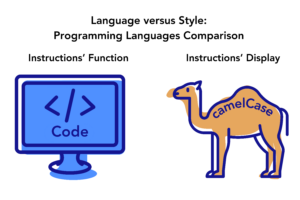
Here’s a comparison with coding. (If you never tried, here’s a very short Hello World hands-on–technically markup and not programming, but it illustrates function versus convention: change red to GREEN as background color and run it.)
-
Plain language = the logic and architecture of your communication, like a programming language.
- Style guide = the conventions and formatting used to express it, like case choices for code.
Honor the Purpose of Each Tool
Plain language and editorial style are partners, not competitors. One helps you make sense. The other helps you look like you belong to the same organization. When each guide does its own job, writers spend less time debating commas and more time ensuring readers understand the information they need to navigate systems, make decisions, and participate fully.
Plain language opens doors. Editorial style keeps the hallway tidy. You need both.
—-
P.S.: A Quick Comma+ Story
Remember the “5-Million Dollar Comma” case? It was a dispute in the State of Maine involving overtime pay exemptions and the tiny punctuation mark—or, more accurately, the lack thereof in: “marketing, storing, packing for shipment or distribution.” The missing comma AND the missing parallel structure between “distribution” as a noun and the gerunds on the list (-ing forms) convinced the court that the language was sufficiently ambiguous to grant drivers (who did the distribution) 5 years of overtime pay. The truck drivers argued they “distributed” goods but did no “packaging for shipment or distribution” (interpreted as a single activity), so the exemption should not apply to them!
Both editorial style and plain language choices matter.
Back to Plain Language Guide Section. Back to Style Guide Section.